How Much Does a Bail Bond Cost in California?

California bail bond premiums come from rate filings the state approves, and 10% is the standard. Here is what that works out to in dollars, what changes your upfront payment, and how financing works.

The short answer

What you pay, and what it buys

Ten per cent of the bail amount is the standard premium. The number worth understanding is not that one — it is how much of it has to clear tonight.

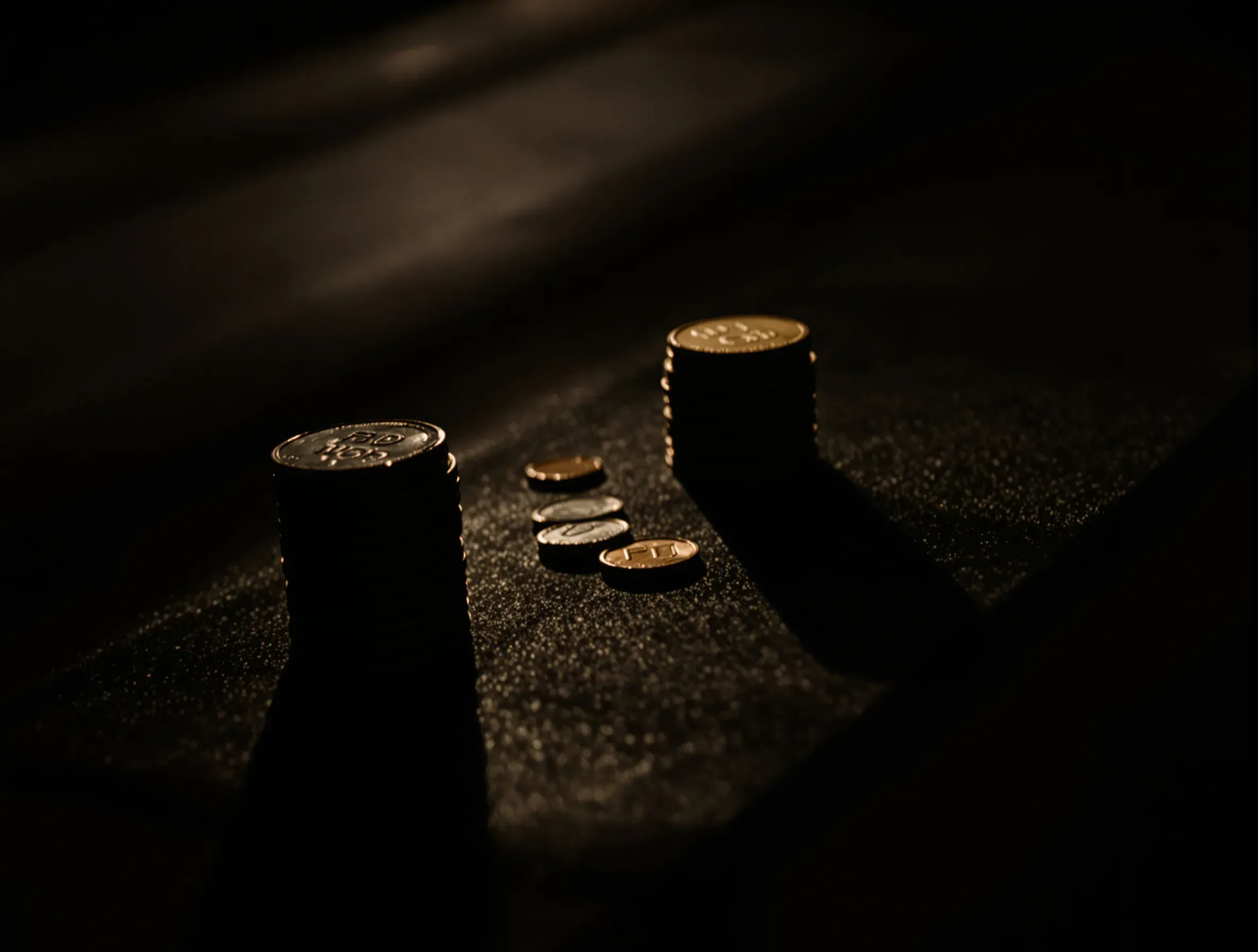
Three small stacks of coins on a dark table casting long shadows
The number

The standard premium for a licensed California bail agent is 10% of the bail amount. If the court set bail at $20,000, the premium is $2,000. That is the figure, and you can work it out for any bail amount with the same arithmetic — the rate does not climb as the number gets bigger.

Where it comes from matters, because it is not a price a bondsman invents on the night. Every surety files its rates with the California Department of Insurance and has them approved, and an agent charges the approved rate. Ten per cent is the standard one. It is not the only one — approved rates below it exist for some circumstances — which is why this page says "standard" rather than "fixed". The court sets the bail amount itself long before a bail agent is involved.

The premium is a fee, not a deposit. It pays for carrying the whole bail amount on your behalf and it is earned once the bond is posted, so it does not come back at the end of the case. That is the single thing most first-time callers have wrong, and it is worth being blunt about: the money people expect to get back is cash bail, paid to the court in full and returned when the case closes — an arrangement that means finding the entire $20,000 yourself first. How a bail bond works as an instrument sets out the rest of what that premium buys.

What is genuinely variable is not the rate but how much has to clear before the bond is posted, and that is what the rest of this page is about. Bail Bond Central quotes the number in full before anything is signed, under CA Bail License #6015872, and there is no charge for the call, for finding someone in the county system, or for the quote itself. The general FAQ covers the questions that are not about money.

The arithmetic

What the standard premium comes to

Three worked examples at the standard 10%. They are illustrations of the arithmetic, not packages — nobody picks their bail amount, and yours is whatever the court has already set.

If bail is $5,000

One of the smaller figures a bail schedule produces — and $500 is the whole of what a licensed agent charges to post it.

$500
  • Most families pay this in one piece
  • Credit card, debit, check or cash
  • A payment plan is rarely needed at this size
  • The same $500 at 2am as at 2pm
Call for your number

If bail is $20,000

The example this site uses everywhere else, because it sits close to the middle of what we write.

$2,000
  • The size where payment plans come up most
  • Financing on qualifying bonds
  • Usually one indemnitor signs
  • Collateral is not normally involved
Call for your number

If bail is $50,000

Larger bail, identical arithmetic: the rate does not climb with the number. What changes at this size is the paperwork; the percentage stays put.

$5,000
  • Collateral is more likely to be asked for
  • Financing on qualifying bonds
  • A second signer is sometimes needed
  • Still one rate, applied to a bigger number
Call for your number
Your case, not an example

The only figure that matters is the one on your case

Give us a name and a county and we will read the bail off the record while you are still on the line, then tell you the premium and what has to clear tonight. No charge for the call, the search or the quote.

Call (909) 310-3370 Send us the details

ConfidentialAnswered 24/7No obligation

What moves the number

Six things that change what you pay tonight

The rate is the rate. What varies is how much of the premium has to clear before the bond reaches the jail, and that comes down to the bond, the signer and the charge.

The bail amount the court set

The premium is a percentage, so the only thing that moves it is the bail figure itself. If a judge reduces bail at arraignment, a bond written afterwards follows the new number down.

Which approved rate applies

Sureties file their rates with the Department of Insurance and different insurers file different ones. Ten per cent is the standard approved rate, not the only one that exists — so the honest answer to "is it always 10%" is "it is the standard, and we will quote you the actual figure".

Whether the premium is financed

Financing on qualifying bonds splits the premium into payments, so what has to clear before the bond goes to the jail can be less than the full figure. The premium does not change — only when it is paid.

Who signs as indemnitor

The person signing is most of what decides whether a plan is open at all: whether they are working, whether they are local, and whether they can stand behind the bond for as long as the case runs.

Whether collateral is involved

Property, a vehicle title or something of comparable value can support a plan on a larger bond. Collateral is security, not payment — it is released when the case ends and the court exonerates the bond.

Whether the bond needs approval first

The charge tells us early whether a bond needs a co-signer, or a hearing before a court will take it at all. That changes the paperwork and the timing rather than the rate, and you hear it on the first call.

The bill

What is never charged for

Four things people expect to be billed for on a bail bond, and are not.

There is no fee for the phone call, no fee for finding someone in the county system, and no fee for the quote. You can call at three in the morning, have the bail amount read off the record and the premium quoted to the dollar, and hang up owing nothing at all. There is no after-hours rate, no weekend rate and no holiday rate, because the drive to the jail was always going to be ours and it costs the same at 4am as at 4pm. When the case ends and the court exonerates the bond, there is no closing charge and no account left open — the premium was the fee, and it was the whole of it.

Never on the bill

  • The phone call
  • The inmate search
  • The written quote
  • Nights, weekends, holidays
The premium is the only figure you will ever be quoted
Before you commit

Questions about the money

Six answers about what a bail bond costs, what has to be paid before it is posted, and what happens if the premium is out of reach.

Is the 10% negotiable, or can I find it cheaper elsewhere?

The premium is not a haggling number. Sureties file their rates with the California Department of Insurance and a licensed agent charges an approved rate, which is why ten per cent is quoted so consistently across the state. Approved rates below it do exist for some circumstances, so it is a fair question to ask any agent directly. What should make you cautious is the opposite: a quote well under the approved rate, or one nobody will put in writing before you sign. Ask for the figure in full, in advance, and compare that.

Can I pay the premium in instalments?

Often, yes. We offer financing on qualifying bonds, and most families do not pay a premium in one piece. Whether a plan is available on your bond, and what it looks like, depends on the size of the bail and on who is signing as indemnitor — so it is settled on the first call rather than quoted here. We will tell you what applies to your bond before anything is signed, and we do not start paperwork on terms you have not agreed to.

What do I actually have to pay before the bond is posted?

Enough of the premium to put the bond on risk, which on a plan is less than the full figure and on a straightforward bond is the whole of it. This is the number people mean when they ask what a bail bond costs tonight, and it is the one that genuinely varies from caller to caller. Until it is settled the bond cannot go to the jail, so it is worth asking about on the first call rather than after the paperwork has started.

Are there other fees on top of the premium?

No. The premium is the fee. We do not add a posting fee, a travel charge, a paperwork charge or an after-hours rate, and there is no closing charge when the case ends and the bond is exonerated.

Does it cost more if the jail is further away?

No. The premium is a percentage of the bail amount and nothing else feeds into it — not the facility, not the distance, not the hour the drive happens. We post at the county facilities across San Bernardino, Riverside and Orange counties, and that drive was always going to be ours. What distance can affect is timing rather than price.

What if I cannot raise the premium at all?

Then say so on the call, because there are routes that do not involve a bail agent and you should know about them. A court can release someone on their own recognizance with no money at all, and defence counsel can ask for bail to be reduced at arraignment — either of which changes the arithmetic completely. We would rather point you at the right route than take a call that goes nowhere.